

After connecting and importing your data into Pagos, you may notice slight differences between Pagos and your processor’s reports. If reconciliation reveals discrepancies you can’t account for, submit a Data Audit Request.
Step 1 – Retrieve Your Client ID and Create a Secret API Key
Retrieve Your Client ID
Your Checkout.com Client ID is required when adding the data connection in Pagos. To find it:- Sign in to the Checkout.com Dashboard.
- Click the Settings icon in the top-right corner.
- Click Account details.
- Under Unique identifiers, copy your Client ID.
You must have the Account owner or Admin user role in Checkout.com to view the Client ID. If you can’t find it, contact your Checkout.com Account Manager or request support.
Create a Secret API Key
For added data security, use a secret API key to connect your Checkout.com and Pagos accounts. If you don’t already have one, you’ll need to create one in the Checkout.com dashboard. Log into your Checkout.com account, then follow the process outlined in Checkout.com’s documentation to locate your API keys. While following the instructions in this guide, keep in mind the following:- When selecting an API key, select Secret API key and add a description that identifies the key as a Pagos key
-
Under Scope, navigate from Default to Customize and select the following checkboxes:
- balances:view
- disputes:view
- files
- financial-actions:view
- flow:events
- flow:workflows
- gateway
- payments:search
- reports
- reports:view
- risk
- If you have more than one Entity with Checkout.com, you’ll need to create a new secret API key for each of your Entities. Use the Entity field to select which one you’re generating a key for.
Step 2 - Configure Reports in Your Checkout.com Account
From your Checkout.com account, configure each of the following report types individually:- Payments
- Disputes
- Authentication
- Real Time Account Updater Report
- Fee Summary
- Financial Actions
- Payouts
1
Click Reports in the left navigation.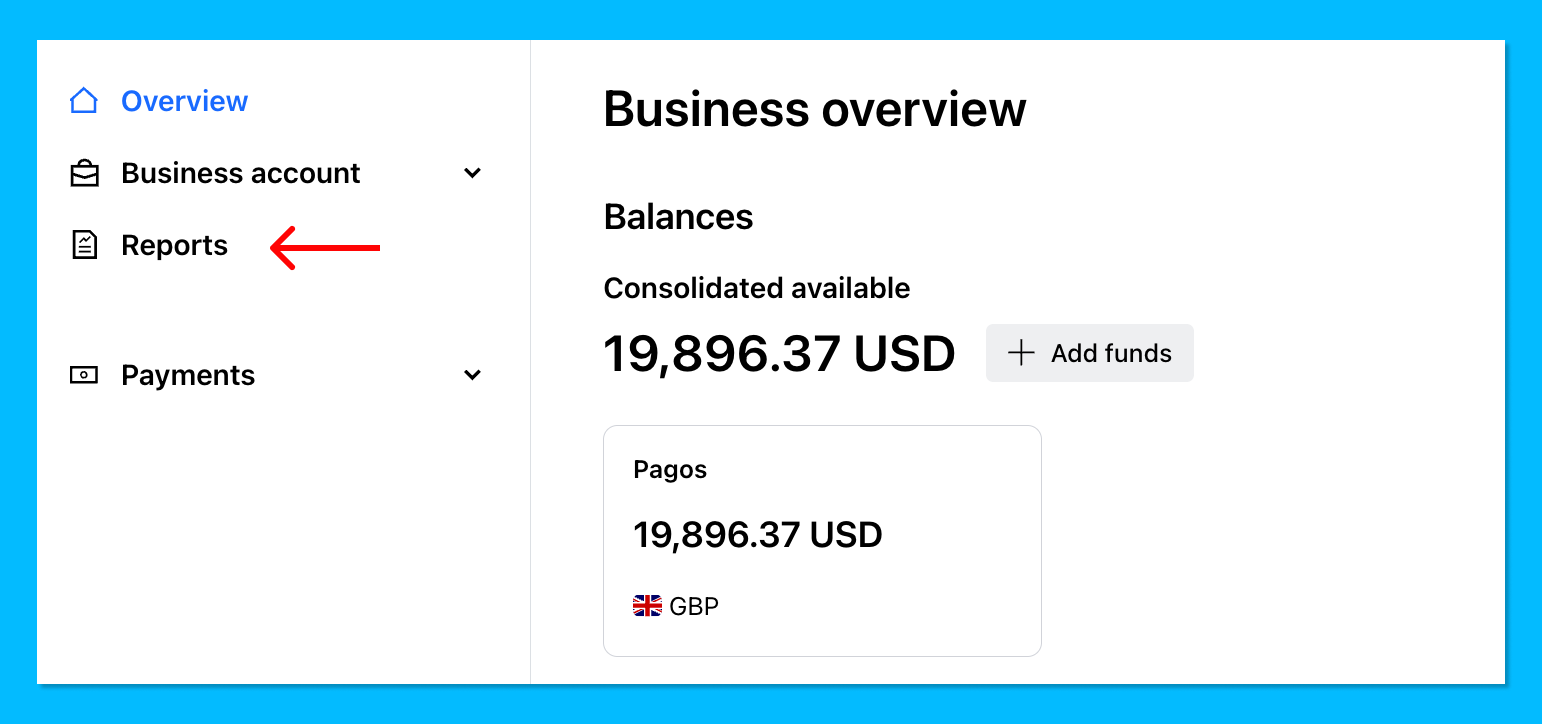
2
In the Reports section, click the Schedules tab, then click Create Schedule.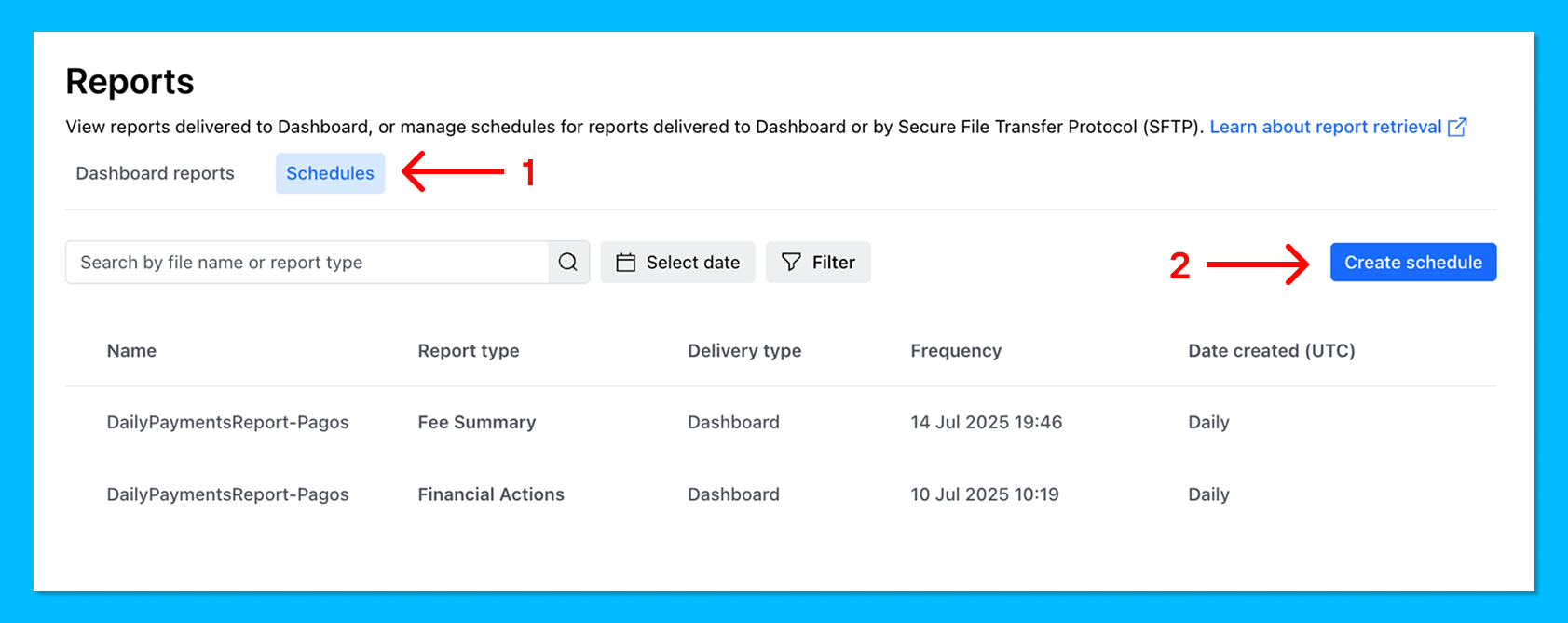
3
Under Delivery type, select Dashboard as the report source.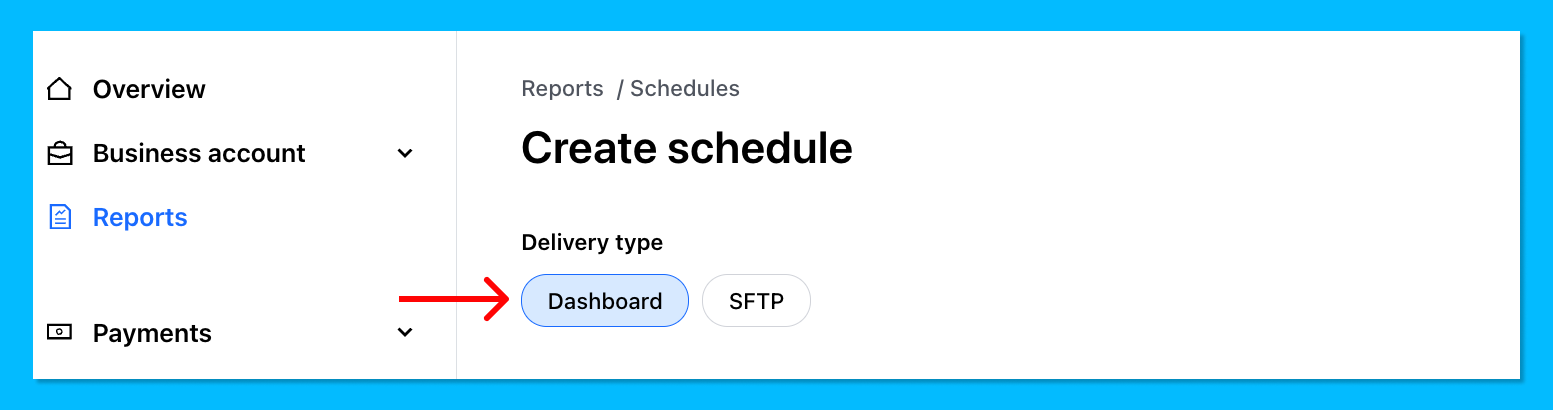
4
Use the Report type dropdown to select the report.
If you have more than one Entity with Checkout.com you must configure the Financial Actions and Payouts reports for each Entity individually.
5
Configure the following settings:
- Time Zone: UTC
- Frequency: Daily.
- Schedule name: Rename it to match the report type (e.g.
DailyFinancialActions-Pagos)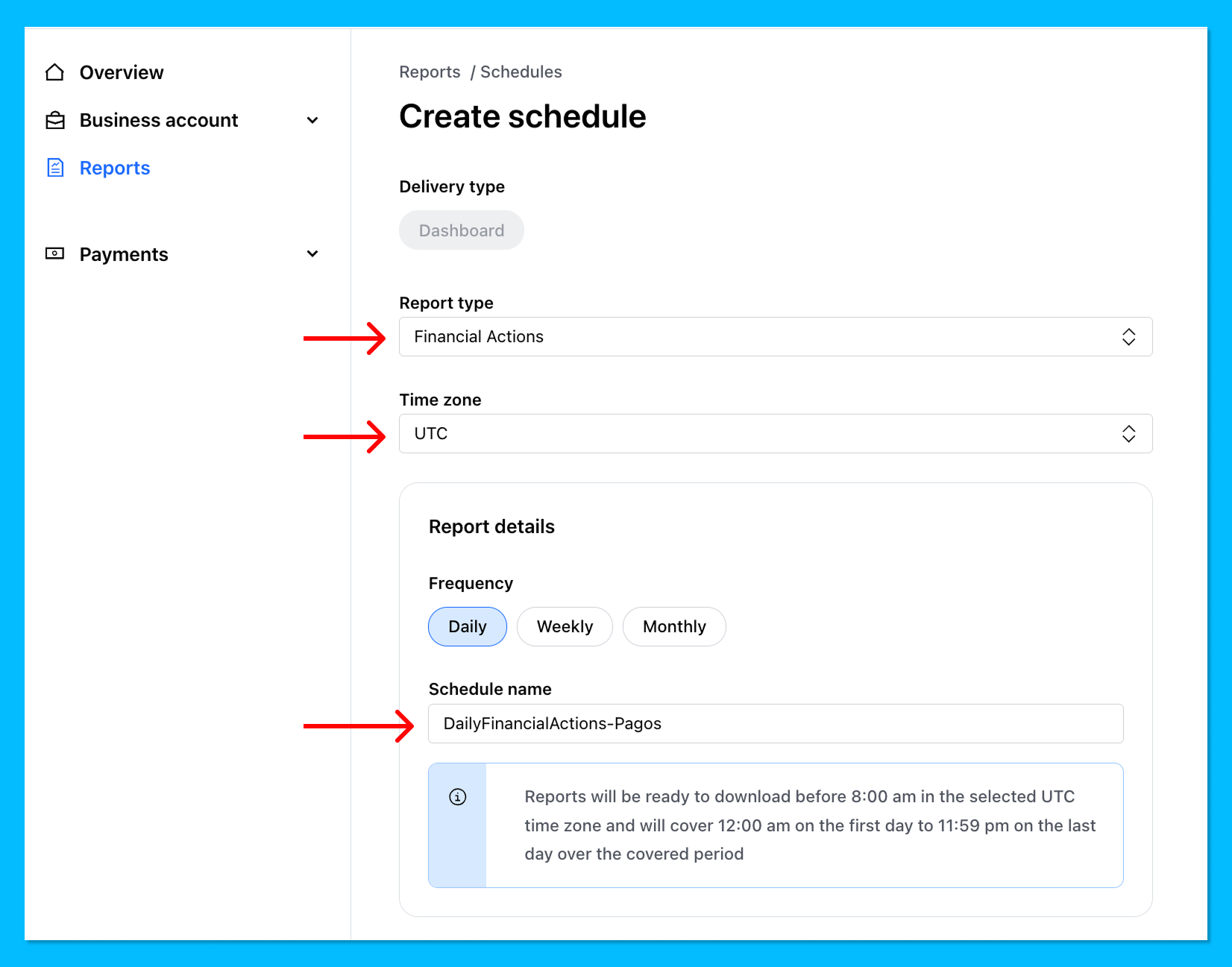
6
Under Customize included fields, click Select all, then deselect any fields that contain PII, such as:
- Billing address
- Shipping address
- Cardholder name
7
Click Create.
Step 3 - Add a New Data Connection to Your Pagos Account
To pull in Checkout.com data to Pagos, add a new data connection in your Pagos account:2
Click the settings icon in the top-right corner of the page.
3
Under Data Connections, click Connections.
4
Click Add Data Connection.
5
In the side panel that opens, click the Provider drop-down, then select Checkout.com.
6
Enter a Data Connection Name. This value is used for display and identification on charts, and can be whatever you prefer.
7
Enter the Client ID from Step 1.
8
Enter a Secret Key from Step 1. If you have more than one Entity with Checkout.com, enter the Secret Key for the Entity with the lowest transaction volume, then securely send the full list of Secret keys to your Pagos Implementation Manager.
9
Click Add Data Connection.
Step 4 - Create a Webhook
From the Data Connections page, click the … in the top-right corner of your new Checkout Connection card. Click Copy Webhook Destination to copy your webhook desitnation URL. Next, log into your Checkout.com account to create the webhook:1
In your Checkout.com dashboard, click Developers in the left navigation, then click Webhooks.
2
Click Create configuration.
3
Enter a Name for the webhook (e.g. “Pagos”).
4
Paste the destination URL you copied from your Pagos account into the Endpoint URL field.
5
Under Events, select all events within each of the following categories:
- Reports
- Disputes
- Fraud
- Gateway
6
Under Entities and processing channels, select all the Entities you created Secret keys for.
7
Click Create webhook.